How I Found Calm That Lasts — My Qigong Journey to Lasting Balance
For years, I chased quick fixes for stress—meds, apps, even silence retreats—but nothing stuck. Then I found qigong. Not as a trend, but as a slow, steady practice rooted in traditional Chinese wisdom. Over time, it reshaped not just my mornings, but my mind. This is about how small, daily movements brought real psychological balance, not overnight, but through consistency, patience, and presence. It’s not about perfection or performance. It’s about showing up for yourself in a way that honors your body, respects your limits, and nurtures your nervous system. What began as curiosity has become a cornerstone of my well-being—a quiet companion through life’s inevitable shifts.
The Burnout That Changed Everything
There was a time when simply getting through the day felt like a victory. Waking up already tired, carrying a low hum of anxiety from morning to night, reacting sharply to small inconveniences—these weren’t occasional states, but my normal. I was functioning, yes, but at what cost? My mind felt frayed, my emotions unpredictable. I tried everything: prescription medications that dulled the edges but left me foggy, meditation apps that promised peace but often left me more frustrated, and weekend retreats that offered temporary relief but no lasting change. The solutions addressed symptoms, not the root.
What I didn’t realize then was that I was caught in a cycle of chronic stress, one that had rewired my nervous system to stay in constant alert mode. The body wasn’t designed to live this way. Over time, sustained stress depletes energy reserves, disrupts sleep, and impairs emotional regulation. I wasn’t broken, but I was out of balance. The turning point came not from another product or program, but from a quiet curiosity about healing traditions that predate modern medicine. I began reading about traditional Chinese medicine (TCM), drawn to its holistic view—that health isn’t just the absence of illness, but the harmonious flow of energy, or *qi*, through the body.
Among the practices I encountered, qigong stood out. Unlike high-intensity workouts that added to my fatigue, or meditation that felt too still for my restless mind, qigong offered something different: gentle, intentional movement paired with breath and awareness. It wasn’t marketed as a fitness trend or a spiritual shortcut. Instead, it was described as a way to cultivate inner strength, to restore what had been worn down by years of overdoing. That resonated deeply. I wasn’t looking for transformation overnight. I was looking for a way to feel grounded again. And so, with no expectations, I began.
What Qigong Really Is (And Isn’t)
Qigong (pronounced “chee-gong”) is an ancient practice rooted in traditional Chinese medicine, with a history spanning thousands of years. At its core, it combines slow, deliberate movements, coordinated breathing, and focused attention to support the smooth flow of *qi*, the vital energy believed to sustain life and health. The word itself breaks down into two parts: *qi*, meaning life force or energy, and *gong*, meaning cultivation or practice. So, qigong literally means “energy cultivation.” But it’s important to understand what this doesn’t mean. It is not mystical, nor does it require belief in unseen forces. It is not a religion, nor is it about supernatural powers. It is a practical, accessible system for enhancing physical vitality and mental clarity.
One of the most common misconceptions is that qigong is either too passive or too esoteric. Some assume it’s just standing still and “thinking calm thoughts,” while others fear it involves complex rituals or spiritual dogma. The truth is simpler. Qigong is a body-based practice that trains the nervous system to shift from a state of constant reactivity to one of regulated calm. It works through measurable physiological mechanisms—such as heart rate variability, respiratory control, and muscle relaxation—rather than abstract concepts. While it is deeply rooted in Eastern philosophy, its benefits are observable and experienced in tangible ways: less tension, better sleep, improved focus.
It’s also not the same as yoga or tai chi, though they share some similarities. Yoga often emphasizes flexibility, strength, and alignment through postures, while tai chi is a martial art form expressed as a flowing sequence. Qigong, by contrast, focuses more on internal awareness and energy regulation. Movements can be small, even subtle—sometimes just shifting weight or raising the hands slowly. The goal isn’t physical mastery, but mental presence. You’re not trying to perfect a pose; you’re learning to inhabit your body with greater sensitivity. This makes it uniquely accessible, especially for those who may feel intimidated by more athletic forms of exercise.
Why the Mind Needs Slow Movement
In a world that glorifies speed, productivity, and constant stimulation, slow movement can feel counterintuitive—even wasteful. But the mind, particularly when stressed, doesn’t need more input. It needs space. This is where qigong shines. The rhythmic, repetitive motions act like a balm for an overstimulated nervous system. Scientific research supports this: practices that combine gentle movement with breath awareness have been shown to reduce levels of cortisol, the primary stress hormone, while enhancing parasympathetic nervous system activity—the “rest and digest” response that counteracts chronic fight-or-flight mode.
When we move slowly and with intention, we signal safety to the body. The brain registers that there is no immediate threat, allowing the physiological systems to downshift. This isn’t just psychological—it’s biochemical. Over time, regular practice can improve heart rate variability (HRV), a key marker of resilience. Higher HRV is associated with better emotional regulation, reduced anxiety, and greater adaptability to stress. In this way, qigong doesn’t eliminate stress—nor should it. Stress is a natural part of life. Instead, it builds capacity. It teaches the mind and body to respond rather than react, to pause before reacting, and to recover more quickly after difficulty.
Another benefit is the creation of mental space. Unlike fast-paced exercise, which can be energizing but sometimes overwhelming for an already anxious mind, qigong offers a moving meditation. The focus on breath and motion creates a gentle anchor, pulling attention away from rumination and into the present moment. It’s not about emptying the mind, but about observing it without judgment. This shift—from being lost in thoughts to noticing them—lays the foundation for psychological balance. Over time, practitioners often report a quieter internal dialogue, a sense of being less hijacked by emotions, and a growing ability to choose how to respond to life’s challenges.
My First 90 Days: Showing Up When Nothing Felt Different
When I began, I’ll admit, I didn’t feel much. The first few weeks were awkward. Standing in one place, raising my arms slowly, breathing deliberately—it all felt strange, almost silly. I wondered if I was doing it “right.” I compared myself to online videos and felt discouraged by my lack of grace. There was no instant calm, no sudden clarity. Some mornings, I rushed through the movements just to check the box. Other days, I skipped it altogether, too tired or too busy. But I kept returning, not because I felt transformed, but because I had made a quiet promise to myself: I would show up, even when it didn’t feel like it was working.
Looking back, that commitment to consistency—over intensity—was the real turning point. I started with just ten minutes a day, usually right after waking. I didn’t aim for perfection. I didn’t track progress in dramatic ways. But gradually, almost imperceptibly, changes began to appear. The first sign was better sleep. I wasn’t falling asleep faster, but I was waking up less during the night. Then, I noticed fewer moments of sharp reactivity—fewer times snapping at my children over small things, fewer instances of feeling overwhelmed by minor setbacks. My baseline mood felt calmer, like the volume on my anxiety had been turned down slightly.
These shifts weren’t dramatic. They didn’t announce themselves with fanfare. They were more like background updates—silent improvements that only became noticeable in hindsight. I didn’t wake up one morning feeling “cured.” But after three months, when a major work deadline triggered what would have once been a full-blown stress spiral, I realized something was different. I felt the pressure, yes, but I didn’t collapse under it. I paused. I breathed. I made a plan. And I got through it without losing sleep or my sense of control. That was the moment I knew—something had shifted, not because of a single practice, but because of daily, quiet repetition.
The Core Practices That Made a Difference
While there are hundreds of qigong forms, I found that just a few foundational exercises were enough to create meaningful change. These three practices became the pillars of my routine, each offering unique benefits for both body and mind. They are simple, safe for most fitness levels, and can be done in a small space with no equipment. The key is not how perfectly you perform them, but how fully you engage your attention.
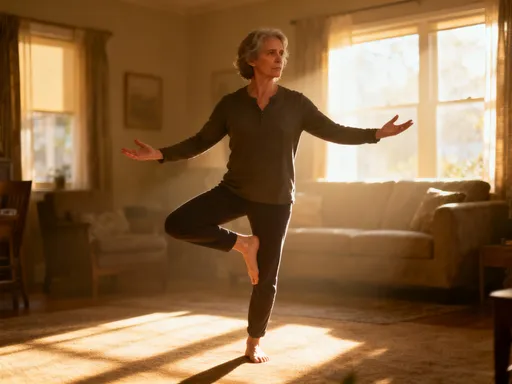
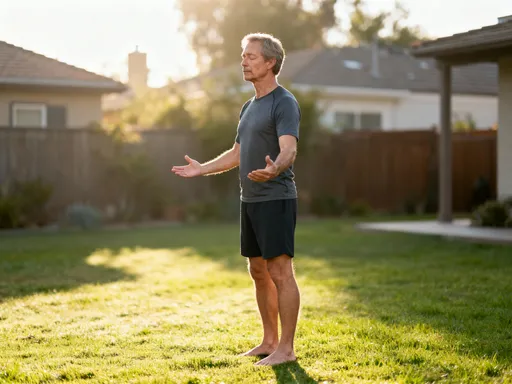
The first is Standing Like a Tree (Zhan Zhuang). It sounds simple—stand with feet shoulder-width apart, knees slightly bent, arms rounded as if hugging a large ball—and yet it is profoundly effective. This practice cultivates stillness, grounding, and internal awareness. By holding a relaxed but aligned posture, you train the body to release unnecessary tension while strengthening postural muscles. More importantly, it teaches patience. At first, standing still for even five minutes can feel challenging, as the mind resists quietude. But over time, it becomes a sanctuary—a daily return to center. Focus on slow, deep breathing, and gently bring your attention back whenever it wanders.
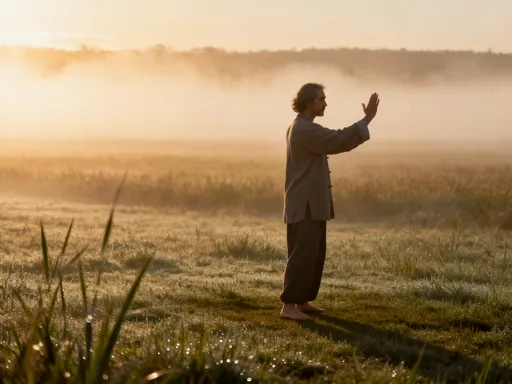
The second is Lifting the Sky. This flowing movement begins with hands at the lower abdomen, then slowly rise in front of the body, palms up, as if lifting an invisible sphere overhead. At the peak, the palms turn and gently lower back down. The motion is smooth, continuous, and coordinated with the breath—inhale as the hands rise, exhale as they fall. This practice stimulates the flow of energy along the body’s central channels and encourages full diaphragmatic breathing. It also fosters a sense of upward expansion and openness, counteracting the forward hunch many of us carry from sitting. Mentally, it promotes a feeling of lightness and possibility.
The third is Separating Heaven and Earth. In this exercise, one hand rises above the head, palm facing up, while the other descends toward the hip, palm down, as if holding the sky with one hand and the earth with the other. The hands then switch positions in a gentle, flowing motion. This movement embodies balance—between upward and downward forces, activity and rest, giving and receiving. It encourages symmetry and alignment, and helps release tension in the shoulders and spine. Mentally, it reinforces the idea of being rooted yet open, strong yet flexible. Practicing just one of these forms for ten minutes a day can yield noticeable benefits over time.
How Qigong Shapes Daily Mindset
One of the most surprising outcomes of my qigong practice has been how it has influenced my everyday life—off the mat, so to speak. I began to notice subtle shifts in how I responded to ordinary situations. Sitting in traffic, I no longer felt the familiar surge of irritation. Instead, I’d catch myself breathing deeply, shoulders relaxed, waiting without resistance. At work, when faced with a difficult conversation, I found I could pause before speaking, choosing my words more thoughtfully rather than reacting impulsively. These weren’t grand transformations, but small moments of presence that added up to a calmer, more centered life.
Another change was increased body awareness. Through qigong, I learned to tune into physical signals—tightness in the chest, shallow breathing, clenched jaw—as early warnings of stress. Instead of ignoring them or pushing through, I began to respond with care: a few conscious breaths, a brief stretch, a moment of stillness. This ability to catch stress in its early stages prevented it from escalating. Over time, I developed what might be called emotional agility—the capacity to move through discomfort without being overwhelmed by it. I no longer saw difficult emotions as enemies to be defeated, but as passing weather patterns to be observed and allowed.
Perhaps the deepest shift was in my relationship with myself. Qigong taught me that balance isn’t about achieving a perfect state of calm, but about learning to move with life’s rhythms. It’s okay to feel stressed. It’s okay to have off days. What matters is the return—the gentle act of coming back to your breath, your body, your center. This practice fostered a sense of inner stability, not because everything was easy, but because I knew I had a reliable way to reground myself. That knowledge, more than any single moment of peace, has been the foundation of lasting psychological balance.
Building a Sustainable Habit Without Pressure
The most common reason people stop a wellness practice isn’t lack of results—it’s lack of sustainability. We start with enthusiasm, then life gets busy, motivation fades, and the habit falls away. With qigong, I learned early that consistency matters more than duration or perfection. You don’t need to practice for an hour to benefit. Even five minutes of mindful movement can reset your nervous system. The key is to make it doable, not daunting.
One strategy that helped me was pairing qigong with an existing habit—like having my morning coffee. I’d do a short sequence while the kettle boiled, or right after I poured my cup. This “habit stacking” made it easier to remember and reduced the mental effort of starting. I also set gentle reminders on my phone, not as demands, but as kind invitations: “Time to breathe.” “Check in with your body.” I stopped tracking progress in terms of performance and instead began noticing how I felt—was I sleeping better? Was I more patient? These small indicators were more motivating than any timer or app.
I also learned to let go of perfectionism. Missing a day—or even a week—doesn’t erase the benefits. The practice isn’t broken by a pause. What matters is the willingness to return. Some days, I only stand quietly and breathe. Other days, I move through a full sequence. Both are valid. The goal isn’t to achieve a perfect routine, but to cultivate a lifelong relationship with self-care. And for those just beginning, I recommend starting with just one exercise, even for three minutes a day. Let it be easy. Let it be kind. Let it be yours.
Conclusion
Qigong didn’t fix me—it helped me reconnect. Through steady practice, I’ve learned that true wellness isn’t about escaping stress, but growing stronger within it. This isn’t a miracle cure, but a quiet, powerful tool for lasting mental balance. It won’t erase life’s challenges, but it will change how you meet them. By showing up for yourself each day, even in small ways, you build resilience, clarity, and a deeper sense of presence. For anyone feeling mentally stretched, emotionally drained, or simply disconnected from their own rhythm, this ancient practice might just offer the gentle reset you didn’t know you needed. It’s not about becoming someone new. It’s about returning, again and again, to who you’ve always been beneath the noise.