How I Found My Balance — Simple Moves That Changed Everything
Balance isn’t just for athletes — it’s a daily game-changer. I used to wobble getting off the couch, but small shifts made a big difference. Turns out, balance training strengthens your body from the ground up, boosts confidence, and helps prevent falls. No fancy gear, no gym required. Just real, simple moves that fit into everyday life. This is my journey — and how you can start too, one steady step at a time.
The Moment I Realized My Balance Was Off
It wasn’t a dramatic fall or a trip to the emergency room. It was a quiet moment — stepping off the curb and feeling my ankle give slightly, just enough to make me grab the lamppost. At first, I brushed it off as a fluke, but soon I noticed it happening more often: hesitating on the stairs, leaning heavily on the kitchen counter when turning, even swaying a little while drying my hair. These small stumbles weren’t isolated incidents — they were signs of something deeper. My balance, once something I took for granted, was quietly slipping away.
What I didn’t realize then was that balance is not just about staying upright — it’s a complex system involving muscles, nerves, and sensory input. According to public health data, falls are among the leading causes of injury-related visits to emergency departments, especially for adults over 50. Yet, many people don’t think about balance until after a fall occurs. The truth is, balance begins to decline as early as our 30s, particularly if we lead sedentary lifestyles. Muscles weaken, reflexes slow, and the body’s ability to respond to shifts in position becomes less efficient. But here’s the good news: balance is not a fixed trait. It’s a skill — one that can be improved at any age with consistent, mindful practice.
That minor stumble on the sidewalk became my wake-up call. I didn’t want to wait for a more serious incident to take action. I started paying attention to how I moved — how I stood, turned, and shifted my weight. I began to see balance not as an athletic luxury, but as a fundamental part of daily strength and independence. And once I made that mental shift, the path to improvement became clearer.
Why Balance Training Matters More Than You Think
Beyond preventing falls, balance training supports overall physical resilience. It works quietly in the background, influencing how we walk, climb, carry groceries, or even stand in line at the store. The science behind balance involves three key systems: the inner ear (which controls spatial orientation), vision (which helps us perceive our environment), and proprioception (the body’s ability to sense where it is in space). When these systems work together, we move with confidence. But modern life often weakens them. Hours spent sitting, wearing flat or unsupportive shoes, and staring at screens all contribute to diminished balance awareness.
Consider this: when you sit all day, your core and leg muscles become underused. Your feet, confined in shoes, lose their natural ability to sense the ground. Your eyes, locked on a screen, stop scanning your surroundings. Over time, this sensory deprivation dulls your body’s reflexes. The result? A subtle but steady decline in stability. You might not notice it until you’re on an uneven sidewalk or reaching for a high shelf and feel that familiar wobble.
The benefits of balance training go far beyond avoiding accidents. Improved balance enhances posture, reducing strain on the back and joints. It promotes joint stability, especially in the knees and ankles, which bear the brunt of daily movement. It also supports functional fitness — the ability to perform everyday tasks safely and efficiently. For many women in their 30s to 50s, this means being able to play with children or grandchildren, carry heavy loads, or navigate busy environments without fear. Balance is not just about physical safety — it’s about maintaining freedom and confidence in your body as you age.
Debunking the Gym-Only Myth
One of the biggest misconceptions about balance training is that it requires special equipment, a yoga mat, or a fitness class. The truth is, effective balance exercises can be done anywhere — in your living room, kitchen, or even at your desk. You don’t need resistance bands, balance balls, or expensive apps. What you do need is awareness and consistency. Simple bodyweight movements, performed with focus, are more than enough to make a difference.
Another myth is that balance training is only for older adults or those recovering from injury. In reality, it’s beneficial at every stage of life. Women in their 30s and 40s may not feel unsteady yet, but building balance strength now creates a reserve for the future. It’s like putting money into a savings account — the earlier you start, the more secure you’ll feel later. Similarly, some believe that only yoga or tai chi practitioners benefit from balance work. While these practices are excellent, they are not the only way. You don’t have to twist into complex poses or meditate for hours. Small, deliberate movements integrated into daily life can yield significant results.
Accessibility is key. The best balance exercises are ones you can do without drawing attention, without special clothing, and without interrupting your routine. Standing on one leg while brushing your teeth, shifting your weight from heel to toe while waiting for the kettle to boil — these micro-moments add up. The goal is not perfection, but awareness. By retraining your body to be present in each movement, you rebuild the connection between mind and muscle, laying the foundation for long-term stability.
My 3 Go-To Daily Balance Moves (And How They Work)
After researching and experimenting, I settled on three simple exercises that became the cornerstone of my daily routine. They require no equipment, take less than ten minutes total, and can be done at home. Each one targets different aspects of balance — static stability, dynamic coordination, and weight distribution — creating a well-rounded foundation.
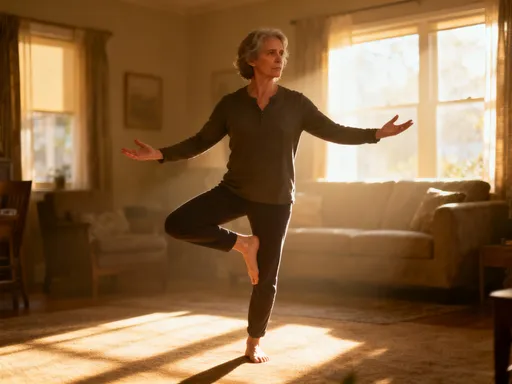
The first is the Single-Leg Stand. This exercise strengthens the muscles around the ankle, knee, and hip while improving proprioception. To do it correctly, stand near a wall or chair for support. Lift one foot slightly off the ground, keeping your knee bent and your core engaged. Focus on a fixed point in front of you to help stabilize your vision. Start with 15 seconds on each side, gradually increasing to 30 or even 60 seconds as you improve. The key is not just holding the position, but doing it with control. If you wobble, that’s normal — it means your body is working to correct itself. Over time, you’ll notice less shaking and more steadiness.
The second move is the Heel-to-Toe Walk, also known as the tandem walk. This dynamic exercise improves coordination and challenges your balance as you move. Walk in a straight line, placing the heel of one foot directly in front of the toes of the other, like walking on a tightrope. Take 10 to 20 steps, then turn and repeat. This movement engages the small stabilizing muscles in your feet and legs while sharpening your spatial awareness. It’s an excellent “balance check” — if you find yourself stepping sideways or losing rhythm, it’s a sign your system needs practice. Doing this walk slowly and deliberately trains your body to move with precision, which translates to safer navigation in real-world environments like crowded sidewalks or narrow aisles.
The third exercise is Weight Shifts, a gentle yet powerful way to improve stability. Stand with your feet hip-width apart and slowly shift your weight forward onto your toes, then back onto your heels. Next, shift side to side, lifting one heel slightly as you lean into the opposite foot. These movements mimic the natural sway of walking and help your body adapt to changes in terrain. They also activate the core and glutes, which play a crucial role in maintaining upright posture. The beauty of weight shifts is their simplicity — you can do them while waiting for the microwave, talking on the phone, or standing in line. They’re subtle, but over time, they build a deep sense of grounding and control.
Turning Chores Into Balance Practice
One of the most effective ways to build balance is to weave it into your existing routine. You don’t need to carve out extra time — just shift your awareness during everyday activities. For example, while brushing your teeth, try standing on one leg. Start with 30 seconds and switch sides. The task takes two minutes anyway, so you’re not adding time — you’re enhancing it. Over time, this small habit strengthens your ankle stabilizers and improves focus.
Another idea is to stand on a folded towel or small pillow while folding laundry or talking on the phone. The unstable surface forces your muscles to make constant micro-adjustments, sharpening your proprioception. At first, you may feel unsteady, but within days, your body adapts. You can also practice good posture while doing the dishes — engage your core, stand tall, and avoid leaning on the counter. These moments of mindful standing reinforce proper alignment and build endurance in the postural muscles.
Even walking can become a balance exercise. Instead of rushing, try walking more deliberately — heel to toe, with even steps and an upright spine. Pay attention to how your feet connect with the ground. Are you landing heavily on your heels? Do you twist your ankles slightly with each step? These observations help you correct imbalances before they lead to problems. The goal is not to turn every chore into a workout, but to use them as opportunities to stay connected to your body. Over time, these small practices create a cumulative effect — like compound interest for your physical well-being.
Progress You Can Actually Feel
The changes didn’t happen overnight, but they were real. After a few weeks of consistent practice, I noticed I no longer reached for the handrail on the stairs. I could turn quickly without grabbing the counter. Walking on uneven pavement — once a source of anxiety — became easier. These weren’t dramatic transformations, but they were meaningful. I felt more confident in my body, more in control of my movements.
Beyond the physical, I experienced a shift in mental focus. Balance training requires concentration — a quiet presence that’s rare in our multitasking lives. Standing on one leg forces you to be in the moment, to tune in rather than zone out. Many women report similar benefits: improved focus, reduced stress, and a greater sense of body awareness. These are non-scale victories — intangible gains that matter just as much as strength or flexibility.
Consistency was the key. I didn’t do long sessions every day — just a few minutes of intentional movement. Tracking progress helped me stay motivated. I started with 10 seconds on each leg and celebrated when I reached 30. I used a simple notebook to mark my daily practice, not to judge myself, but to acknowledge effort. Over time, the exercises felt easier, but I kept raising the challenge — closing my eyes during single-leg stands, adding arm movements, or trying the heel-to-toe walk on carpet instead of hardwood. Each small win built momentum, reinforcing the idea that I was capable of change.
Staying Safe and Knowing When to Ask for Help
While balance exercises are safe for most people, safety should always come first. If you’re new to this type of movement, use a wall, chair, or countertop for support. Never push yourself to the point of dizziness or pain. The goal is steady improvement, not perfection. Avoid practicing on slippery floors or in cluttered spaces where a loss of balance could lead to injury.
It’s also important to recognize when balance issues might signal a deeper concern. If you experience frequent dizziness, unexplained stumbling, or persistent imbalance, it’s essential to consult a healthcare professional. These symptoms could be related to inner ear disorders, vision changes, neurological conditions, or medication side effects. Balance training is a powerful tool, but it is not a substitute for medical evaluation or treatment. A physical therapist can provide personalized guidance, especially if you have joint pain, a history of falls, or mobility challenges.
For most women, however, balance training is a safe, accessible way to invest in long-term well-being. It’s not about achieving athletic feats — it’s about building quiet strength, day by day. It’s about standing tall, moving with confidence, and knowing your body can support you. In a world that often pulls us in a hundred directions, balance offers a rare gift: stability. And that stability isn’t just physical — it’s emotional, mental, and deeply empowering. This journey isn’t about becoming someone else. It’s about returning to yourself — steady, strong, and grounded.